Basic Authentication
Basic Authentication is an HTTP authentication method that verifies a client's identity by sending a username and password with each request. The credentials are combined, encoded using Base64, and included in the HTTP Authorization header.
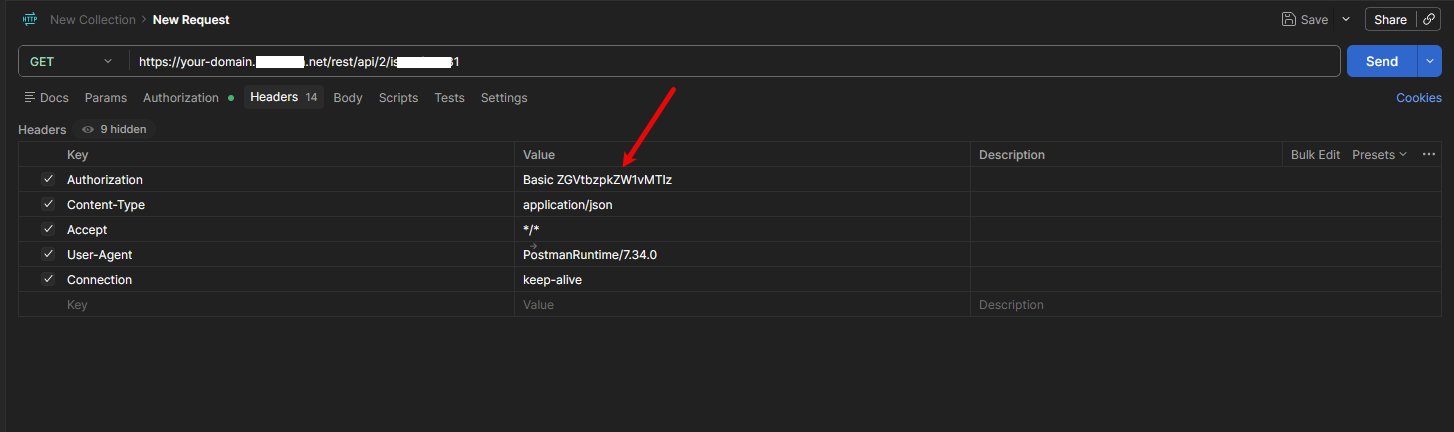
When Basic Authentication is enabled in a REST App, Druid automatically includes an Authorization header in every request sent through that application. The header contains a Base64-encoded representation of the configured username and password in the following format:
Authorization: Basic <Base64 encoded username and password>
Configure Basic Authentication
To configure Basic Authentication:
- Open the desired REST App.
- Turn the Basic REST Security toggle on.
- Enter the API username in the User name field.
- Enter the corresponding password in the Password field.
- Save the app.
Druid basic autehntication for REST API calls works similarly to selecting Basic Auth in Postman and providing values in the Username and Password fields. When a request is sent, Druid combines the username and password, encodes them using Base64, and includes the resulting value in the HTTP Authorization header.
Security Considerations
Base64 encoding is not encryption. To protect credentials during transmission, use Basic Authentication only over HTTPS connections.